
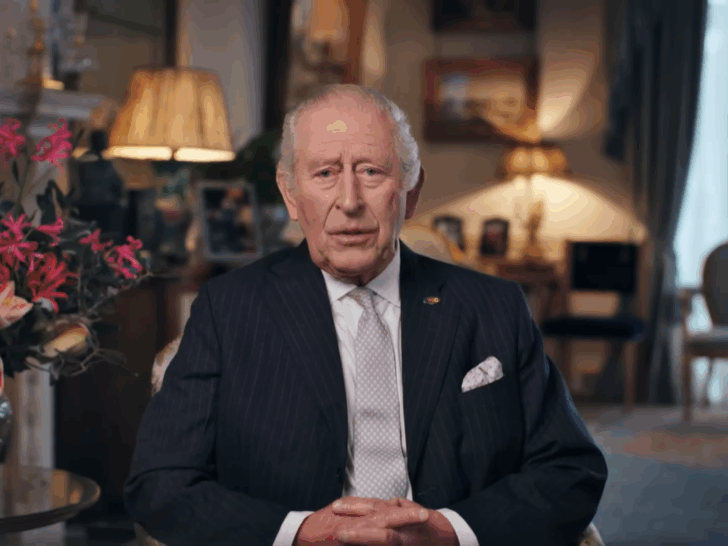
King Charles has good news to share.
Despite dire predictions about the monarch’s cancer prognosis, his treatments have paid off.
Charles is revealing that there’s going to be a significant change to his cancer treatments in the new year.
Is he cured? It sounds more complex than that.
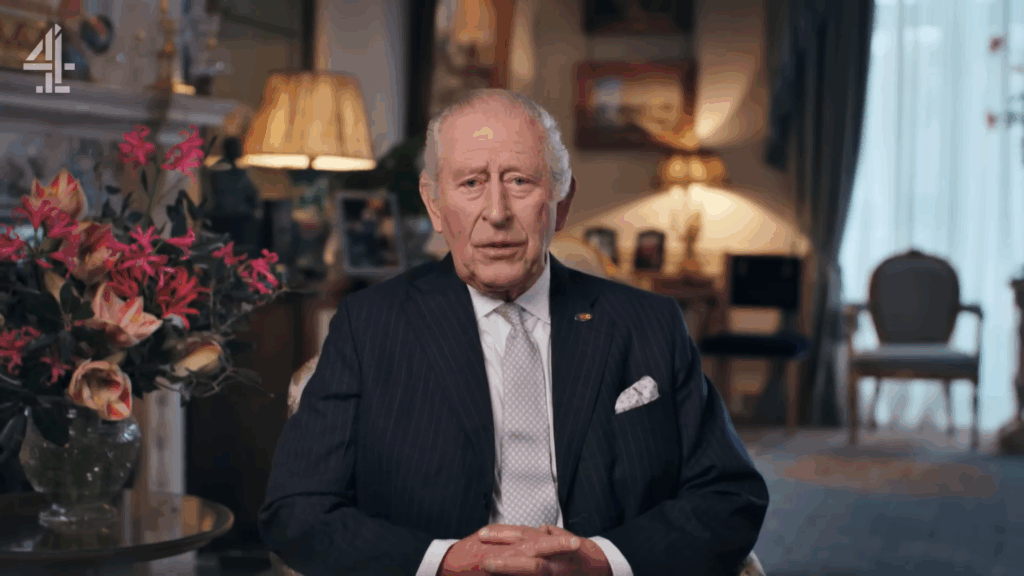
King Charles has an update on his cancer treatments
On Friday, December 12, Channel 4 shared a pre-recorded message from 77-year-old King Charles as part of the Stand Up To Cancer broadcast.
“Today I am able to share with you the good news,” he began. Don’t worry — he isn’t prosthelytizing.
Instead, Charles announced “that thanks to early diagnosis, effective intervention, and adherence to ‘doctors’ orders,’ my own schedule of cancer treatment can be reduced in the New Year.”
It is our understanding that this means that he will continue to undergo cancer treatments, but that they will be less frequent in 2026.
The details — including the exact nature of his cancer — remain private. Or as private as they can be, under the circumstances.
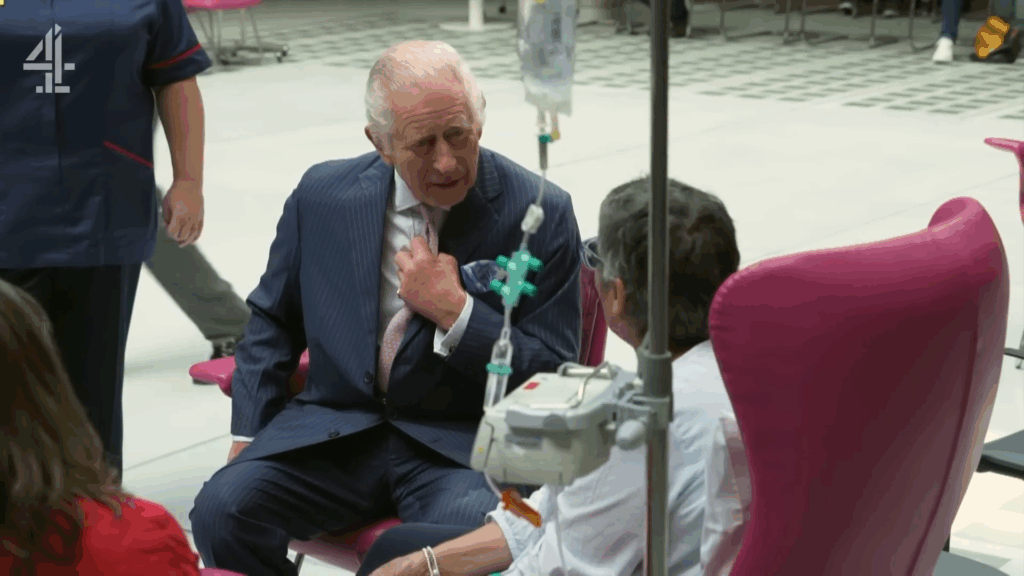
“This milestone is both a personal blessing,” Charles continued, “and a testimony to the remarkable advances that have been made in cancer care in recent years.”
He expressed that this is “testimony that I hope may give encouragement to the fifty percent of us who will be diagnosed with the illness at some point in our lives.”
If that percentage sounds high, it is actually accurate for UK projections. In the US, estimates say that about 40% of the population is likely to develop cancer of some form. Globally, the figure is closer to 20%.
Genetics are a huge risk factor, but other major risks include sun exposure and exposure to carcinogens.
We’re no oncologists, but the UK’s drinking culture and the enduring prevalence of cigarette smoking could account for some portion of the difference.
Does King Charles still have cancer?
We have to emphasize that King Charles did not at any point use the word “remission.”
Yes, things are sounding considerably better than they were a year ago.
In February 2024, Charles revealed his cancer diagnosis. (Memorably, Kate Middleton soon revealed her own diagnosis)
For months, there were alarming reports on the monarch’s prognosis that made him sound as if he were on death’s door.
It seems that things have significantly improved since then. That’s great!
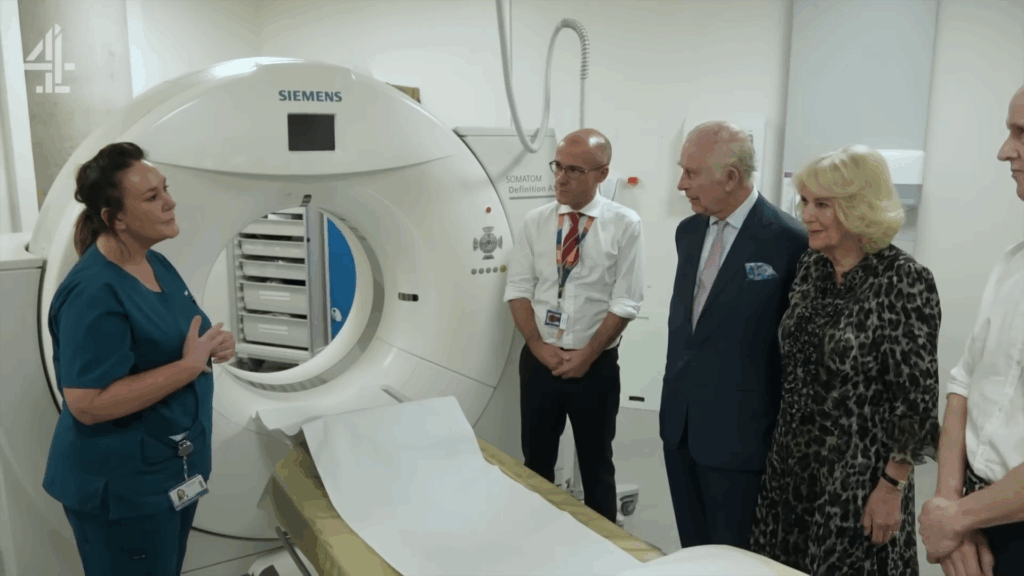
The specifics of Charles’ treatments have been a topic of speculation.
Wild reports at one point claimed that he was sticking to ludicrous homeopathic remedies instead of cancer treatments.
(Having studied some alternative medicines academically, many treatments that can have measurable benefits for overall wellness are no substitute for treating a disease)
However, the widespread belief is that Charles has actually been undergoing weekly chemotherapy as an aggressive cancer treatment.
Clearly, following the advice of his doctors is working out well for him.

Why is he so vague about his own condition?
Apparently, the reason for which King Charles speaks about cancer in such a general manner is that he does not want to make it all about himself.
When he speaks of cancer battles, that includes all of those fighting the deadly disease — not only those who share the same type of cancer that he does.
Obviously, Charles has access to the best healthcare in the world. Most people simply cannot hope to treat an ailment with resources like his.
But it is a good thing to use his ailment to raise awareness and to encourage screenings.
Despite efforts to dismantle it, the UK still has a functioning healthcare system that allows its citizens to obtain medical screenings and assistance without bankrupting themselves as many Americans must. We hope that those with access to screenings will avail themselves of it. Early detection can save many lives.