
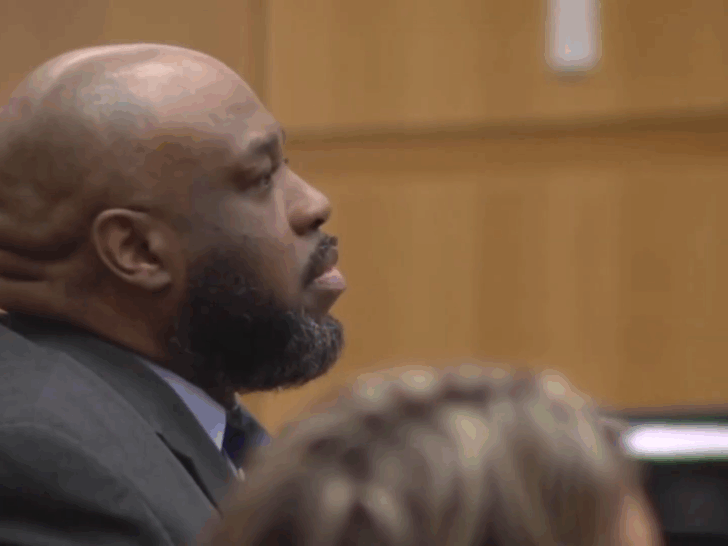
43-year-old serial killer Cleophus Cooksey Jr. has been sentenced to death.
The spree killer murdered nine people over a three-week period in Phoenix back in 2017, killing all of them with a gun.
Though much of his motive (beyond robbery and sexual assault) remains unknown, a jury convicted him for murder, armed robbery, and more.
He has received six death sentences as a result.
In 2017, Cleophus Cooksey Jr. was released from prison after serving a manslaughter sentence.
Vitally, he was part of a robbery and did not kill anyone during that crime. However, under the infamous felony murder rule, all participants in a felony crime are liable for deaths during its commission.
Famously, however, prison does not make people better. Within months of his release, he killed his first known victims.
On November 27, 2017, Cooksey killed Parker Smith and Andrew Remillard, shooting both in a car. The motive remains unknown.
Days later, on December 2, he struck again, killing Salim Richards and stealing a Glock 9mm handgun.

On December 11, Cooksey killed Jesus Real, the brother of Cooksey’s ex-girlfriend. He is the only known victim for whom prosecutors did not press charges.
(It was a messy case, with Cooksey’s ex-girlfriend and Real’s baby mama both being arrested for evidence tampering. Prosecuting this killing might have distracted from the rest of the case)
Two days later, on December 13, he shot and killed LaTorrie Beckford. The motive remains unknown.
On the 16th, he murdered Kristopher Cameron and Maria Villanueva. He allegedly raped the latter. (The jury convicted him for the attempt to commit rape)
Then, on December 17, Cooksey shot and killed his mother, Rene Cooksey, and his stepfather, Edward Nunn.

The killing of his mother and stepfather is how Cooksey was caught.
In movies, dedicated and driven detectives turn their own lives upside down to catch a serial killer. Every now and then, that happens in real life.
But not usually. Most serial killers are of below-average intelligence and escalate their violence, feeling invincible as their killings grow more risky and more frequent.
In Cooksey’s case, neighbors heard gunshots and contacted authorities. When police arrived, Cooksey … answered the door. It’s not every day that checking on a noise complaint ends up catching a serial killer.
Investigators found evidence linking to other killings, including personal items from the victims.

After numerous delays, Cooksey’s trial began in May 2025. He was represented by a public defender.
In September, the jury convicted him of all eight of the murders for which he was being prosecuted.
On December 18, he received a death sentence for six of the eight murders.
The jury was unsure of the punishment for his mother and stepfather’s killings.
He also received a 9-year prison sentence for the other charges, including armed robbery.
The attorney general has contemplated seeking a sentencing retrial for the two murder convictions that did not result in the death sentence.
(Sometimes, redundant sentencing is about covering your bases in case of a surprise on appeal, but it can also just be political)
At this point, it looks very likely that six death sentences will be sufficient to kill Cooksey.
It will take time and, of course, years of appeals. There’s no reversing an execution, so you really want to get it right.
Cooksey has maintained his innocence throughout the investigation and trial.